Lithium Battery Guide
What Is a LiFePO4 Battery? LiFePO4 Meaning, Uses and Selection
A LiFePO4 battery is a rechargeable lithium battery that uses lithium iron phosphate as its cathode material. It is commonly selected for solar storage, backup power, RV, marine, lighting and lead-acid replacement projects where buyers need repeated cycling, stable output and a configurable battery management system.
LiFePO4 meaning: Li stands for lithium, Fe for iron, P for phosphorus and O4 for oxygen. The abbreviation describes lithium iron phosphate, the cathode chemistry used in this battery type.
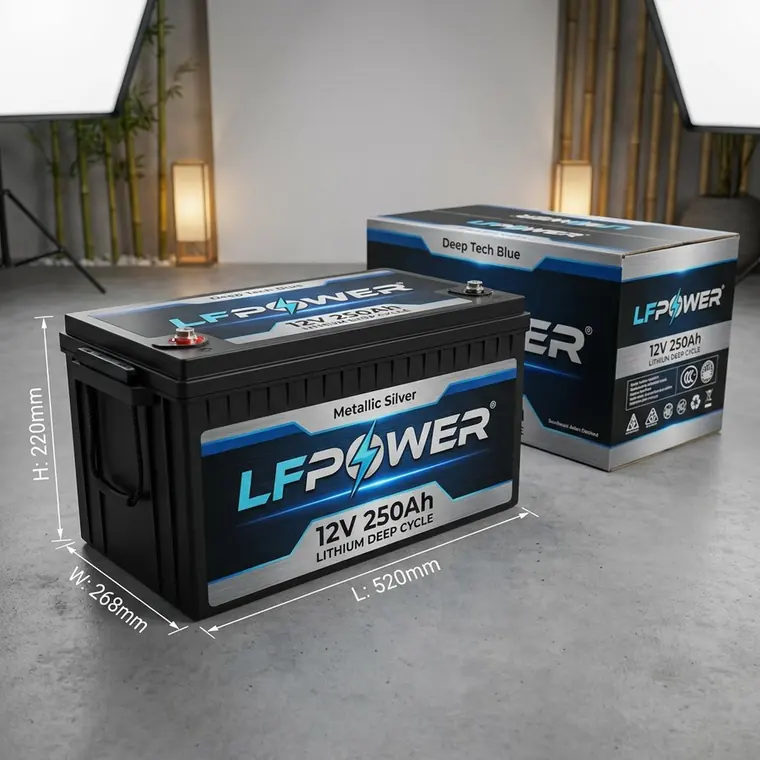
Main LiFePO4 Battery Applications
Solar and off-grid storage
Stores energy from solar panels for night use, unstable-grid areas and remote equipment.
Backup power
Supports communications, security, lighting, UPS and other systems during an interruption.
RV and marine auxiliary power
Runs lights, electronics and appliances where lower weight and repeated cycling matter.
Lead-acid replacement
Replaces selected 12V, 24V or 48V lead-acid systems after charger, load and installation checks.
LiFePO4 Compared with Lead-acid
| Buying consideration | LiFePO4 | Lead-acid |
|---|---|---|
| Repeated cycling | Generally better suited to frequent charge and discharge. | Often preferred where purchase price and simple replacement are the priority. |
| Weight | Usually lighter for a similar usable-energy target. | Usually heavier. |
| Voltage behavior | Relatively stable discharge platform. | Voltage normally falls more noticeably during discharge. |
| Protection | Requires a correctly selected BMS and compatible charging conditions. | Uses a different charging profile and system design. |
| Selection method | Must be matched to the real load, charger and operating environment. | The old label alone is still not enough for a lithium conversion. |
Important: LiFePO4 is not automatically the right answer for every device. A technically sound recommendation starts with the application and electrical data, not only the required amp-hour value.
Information Needed Before Selection
- Application and equipment type, including how many hours the battery works each day.
- Nominal voltage, target capacity, continuous current and peak or startup current.
- Existing charger or charging voltage, solar controller or inverter information.
- Maximum battery space, terminal position, connector, cable and mounting requirements.
- Operating temperature, destination country, order quantity and required export documents.
How LFPOWER Supports B2B Battery Projects
LFPOWER supplies 26700 and 32700 LiFePO4 cylindrical cells, standard battery models and application-based battery pack matching. Buyers can request available product specifications, real product photos, sample confirmation, label and packing discussion, quality-control information and export-document coordination according to the actual model and order.
Common Questions
Can LiFePO4 batteries replace lead-acid batteries directly?
Sometimes yes, but voltage range, charging system, peak current, size, and BMS protection must be checked first.
Are LiFePO4 batteries suitable for solar storage?
Yes. They are commonly used in solar storage because they support repeated charge and discharge cycles.
What should buyers confirm before ordering?
Confirm voltage, capacity, discharge current, charger type, installation space, quantity, label, packing, and required documents.
Need a Suitable LiFePO4 Battery?
Send the application, voltage, capacity, current, installation size, quantity and destination country. We will use those details to discuss a standard model or a custom direction.
Discuss a Battery Project